Skip to content


- Blog
- Announcements
- FinOps X 2026 Day 2 Keynote: Why 95% of AI Fails, FOCUS 1.5 Preview &
FinOps X 2026 Day 2 Keynote: Why 95% of AI Fails, FOCUS 1.5 Preview &
FinOps X 2026 — the largest gathering of FinOps professionals is happening in San Diego this week. Here at nOps, we’re on the floor and keeping an ear on what practitioners are saying in the expo hall, sessions and side conversations.
Over 2,500 practitioners gathering in San Diego this week are all grappling with the same challenge: AI spend is growing 5x faster than cloud spend, and the old frameworks don't quite fit. The playbook is getting rewritten every time OpenAI, Anthropic, or Google ships a new model — and that acceleration was the throughline of the Day 2 keynote.
Here are our top 8 takeaways from the keynote:
#1: Crawl, Walk Run for AI (Ishita Vyas)
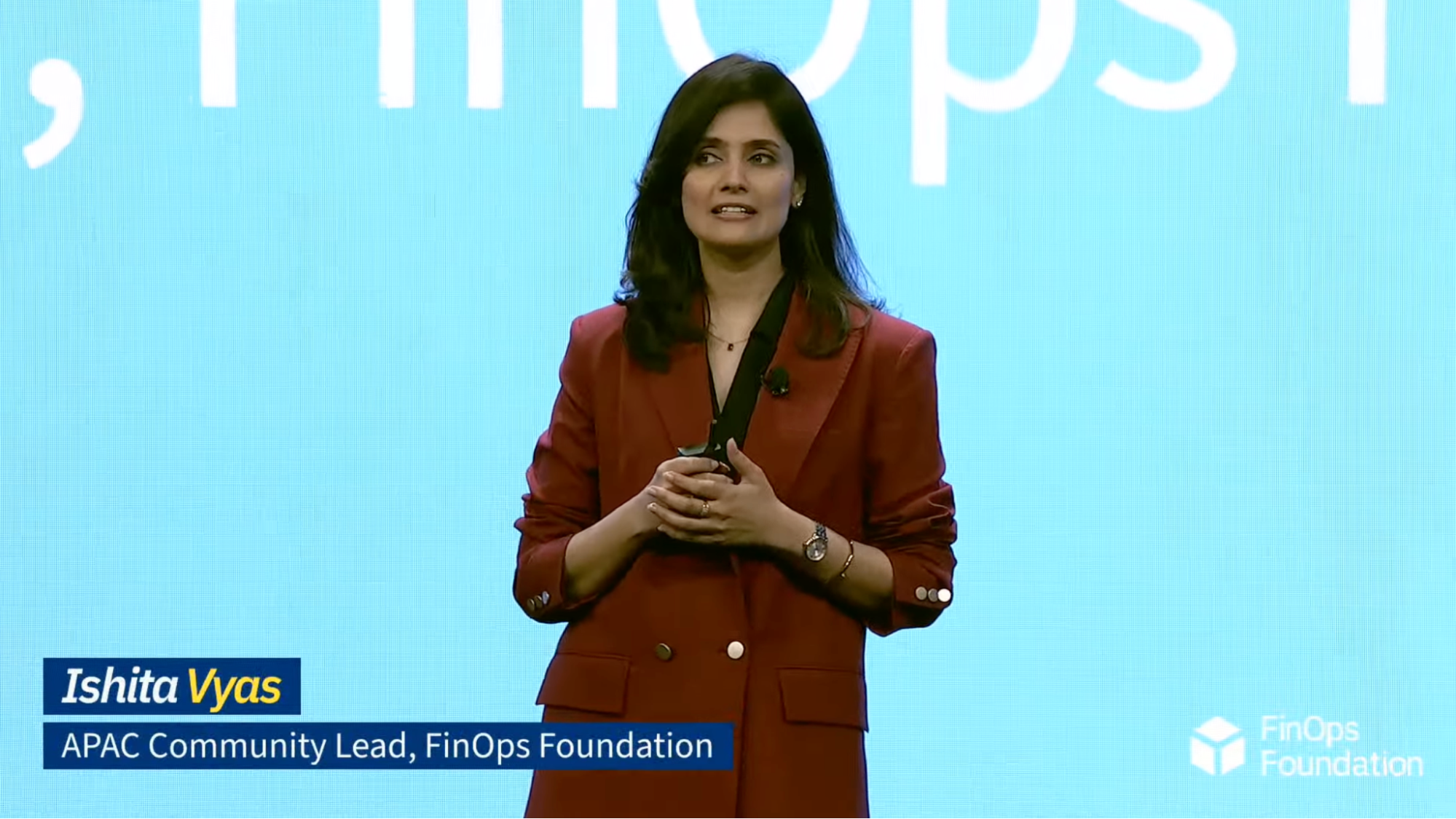
Ishita Vyas of the FinOps Foundation opened by setting the stage from Day 1's conversations about AI adoption journeys and learnings (catch up on the Day 1 keynote recap). She recapped the crawl-walk-run model for agentic FinOps maturity:
- Crawl: You ask, AI answers. Ideas stay in the chat window. You carry the conclusions out yourself.
- Walk: AI finds, drafts, and surfaces; you verify. Your judgment gates every output. Costs are caught before they deploy.
- Run: AI investigates, recommends, and acts autonomously.
Many organizations are still stuck between crawl and walk—running pilots that never scale, building internal tooling that doesn't generalize, and watching AI spend grow without a clear path to ROI.
#2: Someone Who Knows AI Is Coming for Your Job (Mike Fuller)
Mike Fuller from the FinOps Foundation’s topic landed hard: "AI is not coming for your job—someone who knows AI is."
The shift isn't whether AI changes your role. It's whether you're the one making that change, or whether it's being made for you. FinOps practitioners are spending less time gathering data, categorizing, and sorting—and more time analyzing. But AI doesn't know your org. You still need to be the quality filter, the ethical standard, and the judgment layer. Automation doesn't eliminate the need for expertise. But it raises the bar on the type of value you need to add.
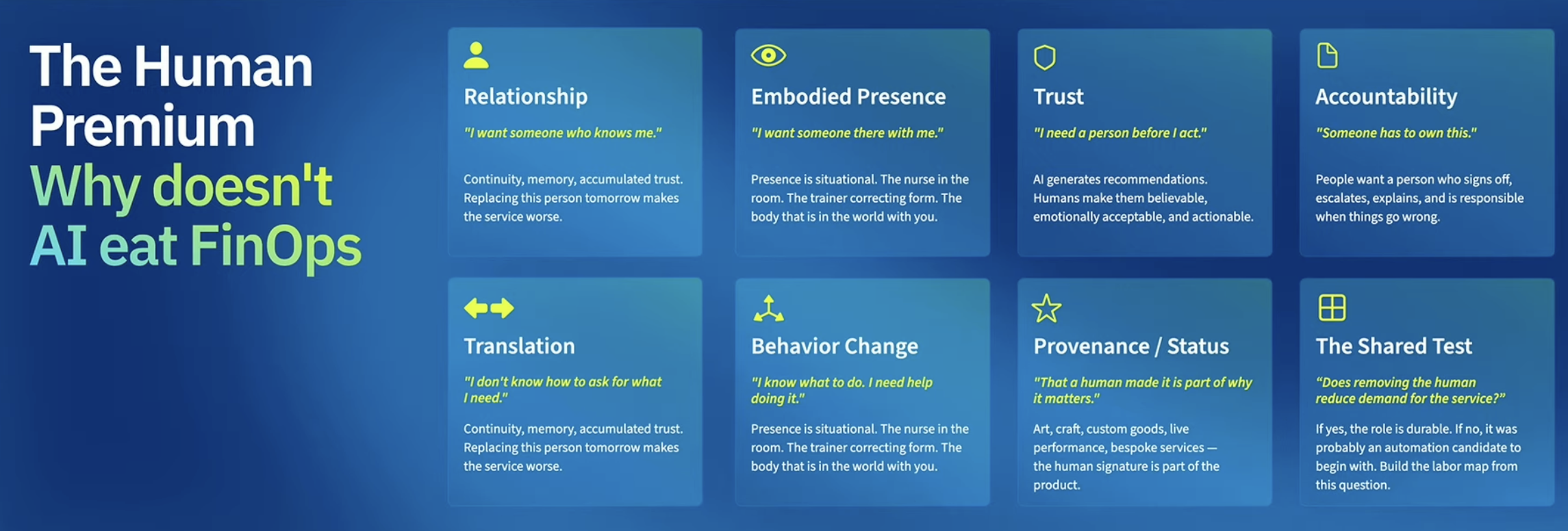
#3: 95% of AI Pilots Fail. Here's Why. (Sarah McMullin)
Sarah McMullin from Google Cloud opened on a stark stat: 95% of organizations see 0 return on AI investments, and only 5% of custom AI pilots make it to production. The gap between experimentation and value realization is wider in AI than it ever was in cloud migration. She framed the problem as three valleys FinOps teams need to cross:
1. Unknown TCO: Most organizations don't know what's driving their AI spend, let alone how to calculate total cost of ownership across training, inference, data pipelines, and tooling.
2. Runaway spend: Without automated guardrails, a single experiment can blow through a quarterly budget in days.
3. $$$ for scale: It’s about choosing the right partner. McMullin previewed new GCP features launching at the conference—AI Cost Visibility, Automated Spend Caps, and FOCUS support in BigQuery Export—designed to help teams cross those valleys.
#4: Tokenomics: The Metrics Don't Exist Yet (Ambud Sharma)
Ambud Sharma from Pinterest gave the day's arguably most technically grounded talk, breaking down how his team thinks about two distinct flavors of tokenomics:
- Product AI: The economics of launched AI features for public consumption. User-facing products with large-scale serving costs.
- Internal AI: Tooling and infrastructure for engineering productivity. Developer velocity and internal token entitlements.
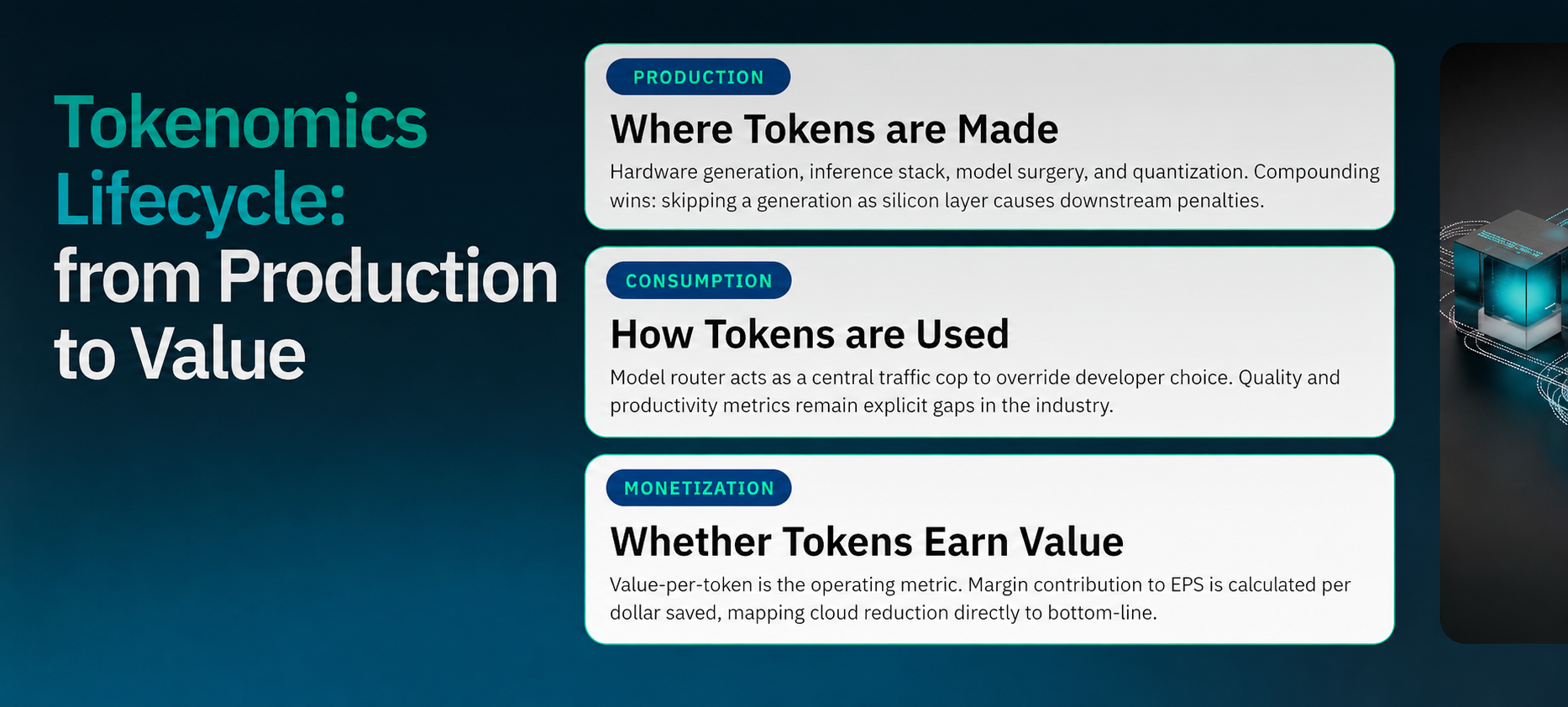
His core thesis: tokenomics is a ratio question, not an absolute cost. It doesn't matter if you spend $100K or $1M on tokens—what matters is the value generated per token. But that's where things break down. The metrics landscape for measuring AI value is immature. Coding productivity metrics like lines of code are easily gamed. Quality signals remain weak across the industry. And forecasting token consumption is nearly impossible when model performance and pricing change every quarter.
#5: Don’t Gate Experimentation (Ambud Sharma)
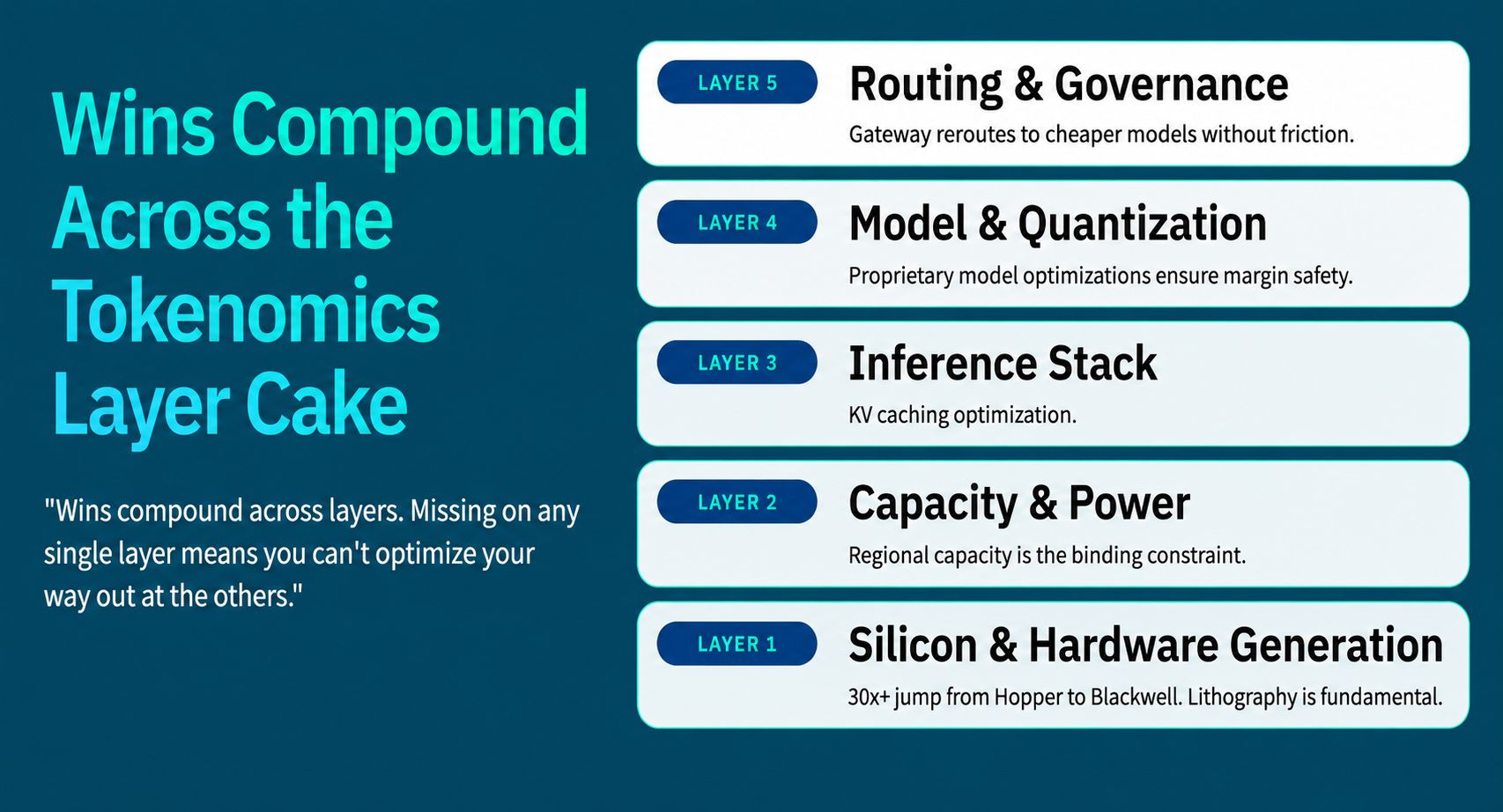
Missing the next big use case costs more than the tokens you’ll burn on failed experiments. He outlined a structured approach for AI cost management to compound wins across the stack—inference optimization, model selection, prompt engineering, caching strategies. Missing optimization at any single layer means you can’t make up the difference at others.
#6: The Executive Lunch: CFOs Are in the Room Now (Ishita Vyas)
Ishita Vyas recapped the executive lunch, surfacing three tensions that define the current moment:
Value over velocity: Are we moving fast enough to compete, or too fast to prove ROI? The pressure to ship AI features is real, but so is the pressure to demonstrate that those features drive revenue, retention, or cost savings.
Tokenomics is unsolved: Forecasting, commitment management, and what tokens actually represent remain open questions.
CEOs and CFOs are involved more than ever: Token costs are showing up in board decks. Finance teams are asking questions engineering teams can't answer yet.
This is new territory for FinOps. Cloud cost management matured over a decade. AI cost management is being built in real time, under pressure, with executive visibility from day one.
#7: Shifting FinOps Left—Before the Code Ships
William Loebig underscored the broader shift happening in the industry: FinOps is moving earlier in the development cycle. His company's acquisition of Kubecost and the demo of their new AI Chatbox + MCP server signal where the market is heading—cost visibility and optimization baked into the tools engineers already use, not bolted on after deployment.
Beyond saving, this approach enables faster iteration. If engineers can see the cost impact of their AI experiments in real time, they can make trade-offs without waiting for a monthly bill. If FinOps teams can set guardrails that trigger before a runaway job costs $50K, they can say "yes" to more experiments instead of locking down access.
#8: What's New in FOCUS: Unit Value and Token Economics
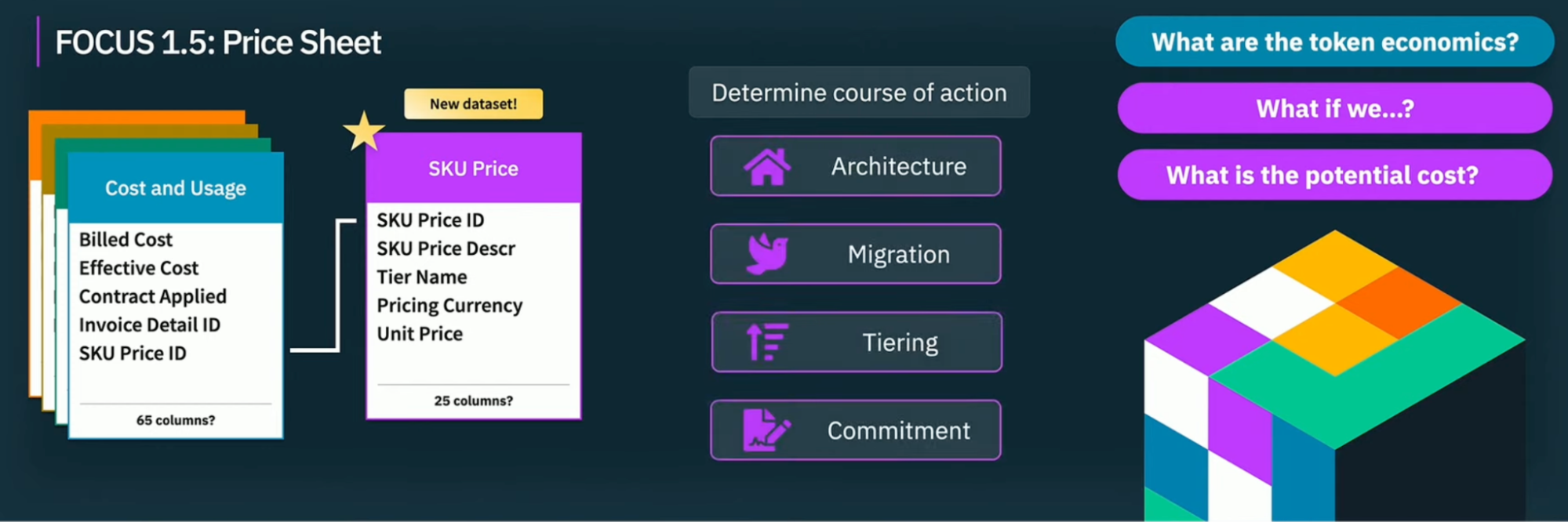
The centerpiece of 1.5: "What is the Unit Value?"—bringing unit and token economics into view by introducing provider list pricing and native AI token tracking. This addresses one of the biggest gaps practitioners face today: the inability to compare token costs across providers or calculate per-unit value for AI workloads in a standardized way.
Alpay also introduced the concept of "Nano Grain" cost and usage storytelling—granular visibility that goes beyond traditional billing dimensions to capture the fine-grained consumption patterns AI workloads demand.
It's a clear signal: the Foundation is committed to building the standards infrastructure that AI cost management urgently needs, and FOCUS 1.5 will be the most AI-focused release yet.
What This Means for FinOps Teams
The Day 2 keynote didn't offer easy answers, but it clarified the questions: How do you measure AI value when the metrics don't exist? How do you forecast spend when pricing and performance are moving targets? How do you prove ROI when the business case changes every quarter?
nOps is on the floor at FinOps X 2026 with a platform built for the realities the Keynote outlined: unified AI, multicloud, and Kubernetes cost visibility and optimization.
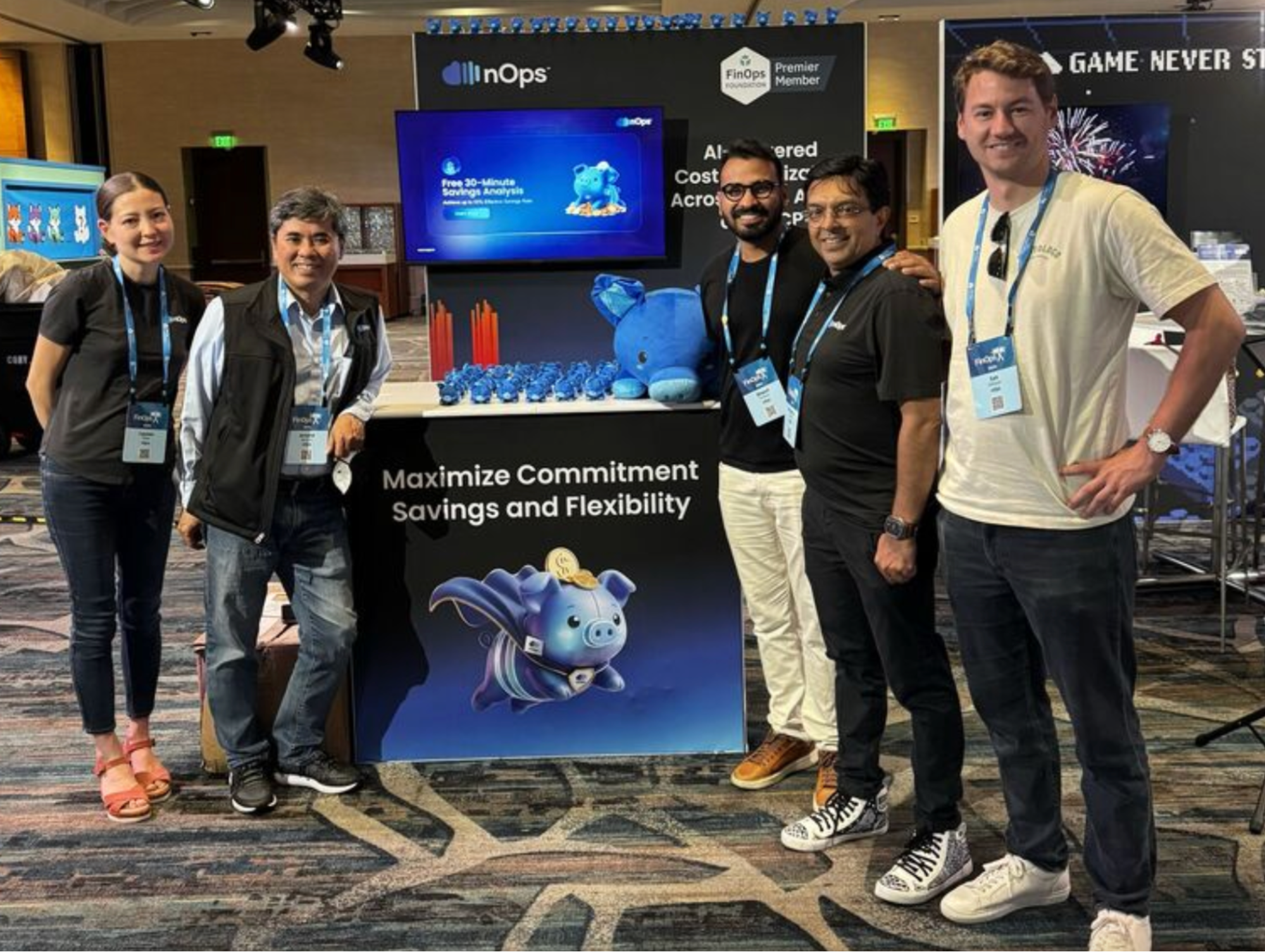
Stop by the nOps booth or book a demo to see how we can help make your FinOps for multicloud and AI effortless.
nOps manages $4 billion in cloud spending and was recently ranked #1 in G2’s Cloud Cost Management category.